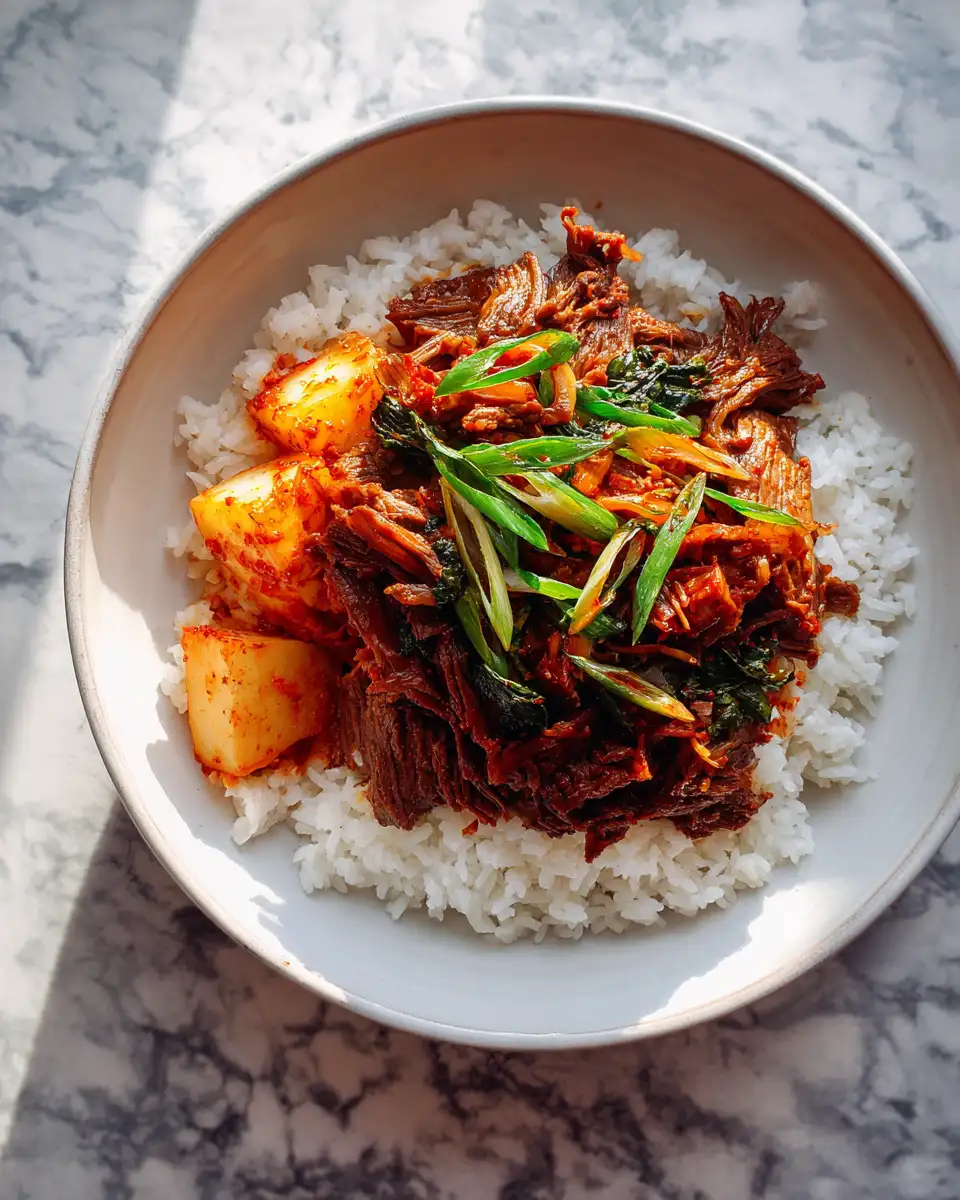
On a chilly afternoon in Asheville, when the mountains are cloaked in mist and the air feels crisp against your skin, there’s nothing quite like the comfort of a rich, savory meal to warm your soul. This Korean Style Pot Roast, infused with flavors that dance between sweet and spicy, is a nod to my love for culinary fusion. Growing up in a vibrant Mexican-American household, I learned early on that food is more than just sustenance—it’s a bridge to different cultures and a way to bring people together. With the heart of my home always in the kitchen, I developed a penchant for experimenting with new recipes that merge my heritage with global influences. This dish is an expression of that passion—simple yet bold, familiar yet novel. Join me as I guide you through creating a meal that promises warmth and a bit of culinary adventure.
Why You’ll Love This Korean Style Pot Roast
In my kitchen, where the scent of spices mingling is as common as a morning breeze, this Korean Style Pot Roast holds a special place. What sets it apart? It’s the perfect marriage of tender beef, slowly simmered to perfection, with the robust flavors of Korean cuisine—think soy sauce, garlic, and a hint of ginger, all blended to create a symphony of taste. Every bite offers a comforting warmth akin to the lively gatherings I remember from my childhood. The simplicity of the ingredients, paired with their complex flavors, makes this dish a staple for those who appreciate both tradition and innovation. Whether you’re a seasoned cook or a kitchen novice, this recipe promises to be both accessible and rewarding. Plus, it’s a surefire way to impress your loved ones without spending hours in the kitchen.
Ingredients You’ll Need for This Korean Style Pot Roast
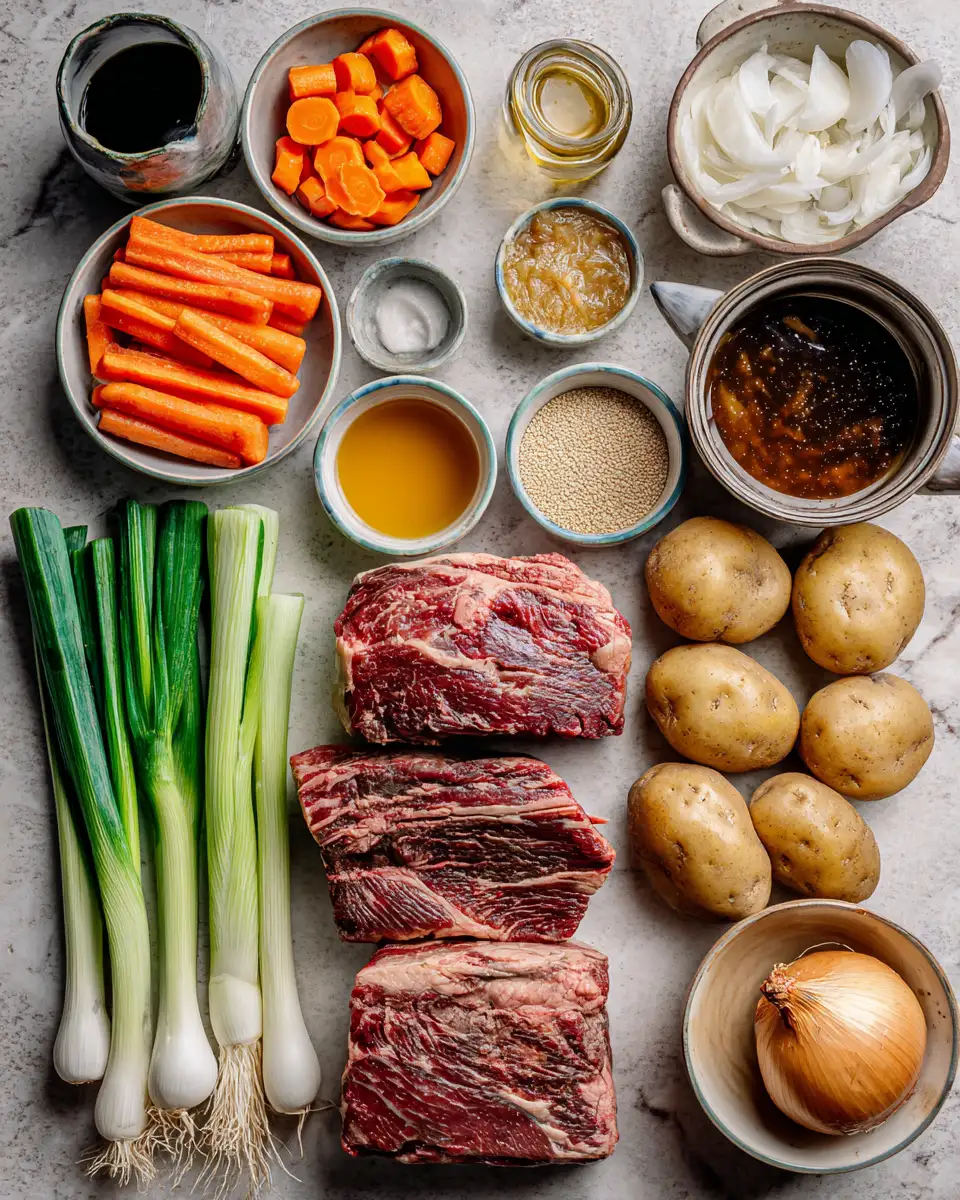
- 3 pounds beef chuck roast
- 1 cup soy sauce
- 1/2 cup brown sugar
- 1/4 cup rice vinegar
- 1/4 cup sesame oil
- 5 cloves garlic, minced
- 1 tablespoon ginger, grated
- 1 cup beef broth
- 2 tablespoons gochujang (Korean chili paste)
- 1 onion, sliced
- 2 carrots, sliced into rounds
- 4 potatoes, quartered
- 2 tablespoons sesame seeds
- 4 green onions, sliced
If you’re looking for substitutions, you can replace gochujang with a mix of sriracha and a touch of honey for a similar heat and sweetness. For a gluten-free version, tamari can be used in place of soy sauce.
Nutrition Facts
- Calories: 450 per serving
- Protein: 40g
- Fat: 25g
- Carbohydrates: 30g
- Fiber: 4g
- Sugar: 10g
- Sodium: 1200mg
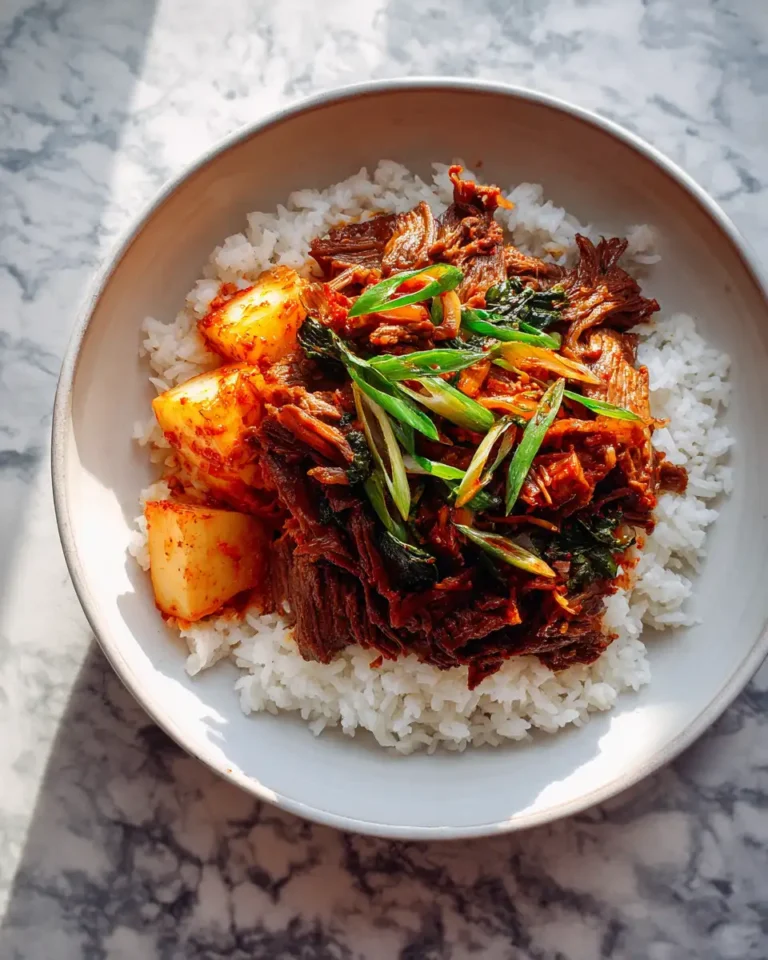
Savory Delight: Unveiling the Secrets of Korean Style Pot Roast
Learn how to make delicious Korean Style Pot Roast. Easy recipe with step-by-step instructions.
- Total Time: 45 minutes
- Yield: 4 servings
Ingredients
- 3 pounds beef chuck roast
- 1 cup soy sauce
- 1/2 cup brown sugar
- 1/4 cup rice vinegar
- 1/4 cup sesame oil
- 5 cloves garlic, minced
- 1 tablespoon ginger, grated
- 1 cup beef broth
- 2 tablespoons gochujang (Korean chili paste)
- 1 onion, sliced
- 2 carrots, sliced into rounds
- 4 potatoes, quartered
- 2 tablespoons sesame seeds
- 4 green onions, sliced
If you’re looking for substitutions, you can replace gochujang with a mix of sriracha and a touch of honey for a similar heat and sweetness. For a gluten-free version, tamari can be used in place of soy sauce.
Instructions
- Preheat your oven to 300°F. This low temperature ensures that your roast will cook slowly and develop deep, rich flavors.
- In a large Dutch oven or oven-safe pot, heat the sesame oil over medium-high heat. Add the beef chuck roast, searing on all sides until browned, about 4-5 minutes per side.
- Remove the beef and set aside. In the same pot, add the onions, garlic, and ginger, sautéing until fragrant, about 2 minutes.
- Stir in the soy sauce, brown sugar, rice vinegar, beef broth, and gochujang. Bring to a gentle simmer, scraping up any browned bits from the bottom of the pot.
- Return the beef to the pot, nestling it into the liquid. Add the carrots and potatoes around the meat.
- Cover the pot with a lid and transfer to the preheated oven. Roast for 3-4 hours, or until the beef is fork-tender and the vegetables are cooked through. I find that checking every hour ensures the perfect texture.
- Once done, remove from the oven and let rest for 10 minutes. Garnish with sesame seeds and sliced green onions before serving.
- Prep Time: 15 minutes
- Cook Time: 30 minutes
- Category: Main Dish
- Method: Cooking
- Cuisine: International
Steps to Create Your Korean Style Pot Roast
- Preheat your oven to 300°F. This low temperature ensures that your roast will cook slowly and develop deep, rich flavors.
- In a large Dutch oven or oven-safe pot, heat the sesame oil over medium-high heat. Add the beef chuck roast, searing on all sides until browned, about 4-5 minutes per side.
- Remove the beef and set aside. In the same pot, add the onions, garlic, and ginger, sautéing until fragrant, about 2 minutes.
- Stir in the soy sauce, brown sugar, rice vinegar, beef broth, and gochujang. Bring to a gentle simmer, scraping up any browned bits from the bottom of the pot.
- Return the beef to the pot, nestling it into the liquid. Add the carrots and potatoes around the meat.
- Cover the pot with a lid and transfer to the preheated oven. Roast for 3-4 hours, or until the beef is fork-tender and the vegetables are cooked through. I find that checking every hour ensures the perfect texture.
- Once done, remove from the oven and let rest for 10 minutes. Garnish with sesame seeds and sliced green onions before serving.
Tips for Making the Best Korean Style Pot Roast
As someone who loves the art of cooking, I’ve learned that patience is key with a dish like this. Letting the meat marinate overnight can enhance the flavors even further. Also, don’t skip the searing step—it’s crucial for locking in the juices and adding depth to the dish. If you’re short on time, a slow cooker can be a great alternative, just set it on low for 8 hours. Remember, the joy of this recipe is in the layers of taste and the warmth it brings to any gathering.
Serving Suggestions and Pairings
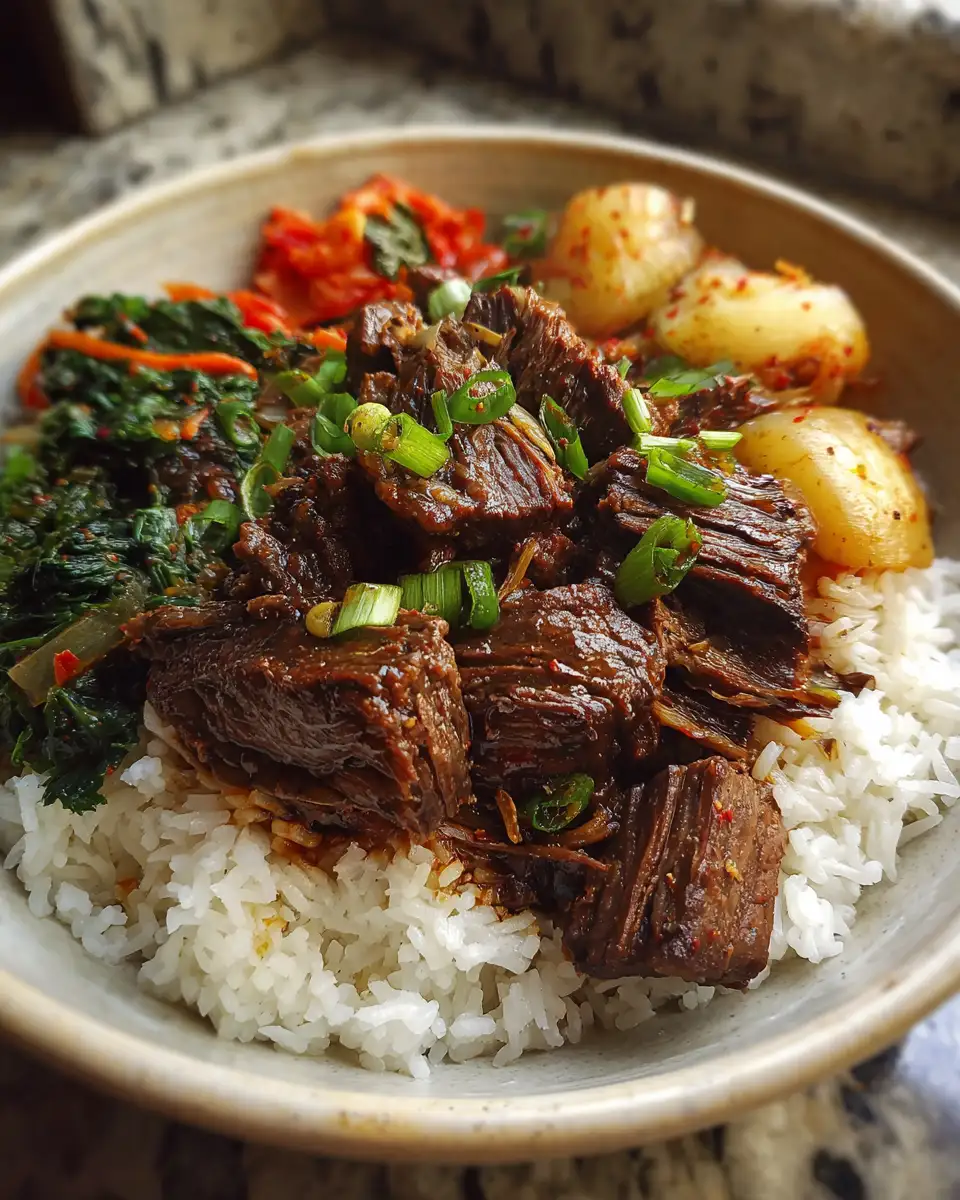
In my house, this pot roast is often the centerpiece of a hearty meal. I love serving it with a side of steamed jasmine rice, which soaks up the luscious sauce beautifully. A crisp cucumber salad can add a refreshing crunch that complements the rich flavors. If you’re feeling adventurous, try pairing with a light kimchi on the side—it adds a tangy kick that elevates the entire meal. A glass of light red wine or a cold Korean beer can also be the perfect accompaniment.
Storage and Reheating Tips
Leftovers of this dish are a blessing. Store them in an airtight container in the refrigerator for up to three days. When reheating, I recommend doing so gently on the stovetop over low heat, adding a splash of beef broth to keep the meat moist. Alternatively, you can reheat in the oven at 300°F until warmed through. This pot roast also freezes well; just make sure to thaw it overnight in the fridge before reheating.
Frequently Asked Questions
What are the main ingredients for Korean Style Pot Roast?
The main ingredients for Korean Style Pot Roast include the items listed in our ingredients section above. Each ingredient plays a crucial role in achieving the perfect flavor and texture.
How long does it take to make Korean Style Pot Roast?
The total time to make Korean Style Pot Roast includes both preparation and cooking time. Check the recipe card above for exact timing details.
Can I make Korean Style Pot Roast ahead of time?
Yes, Korean Style Pot Roast can often be prepared in advance. Store it properly in an airtight container in the refrigerator and consume within the recommended timeframe.
What can I serve with Korean Style Pot Roast?
Korean Style Pot Roast pairs well with various sides and accompaniments. Consider the serving suggestions mentioned in the recipe for the best dining experience.
Is Korean Style Pot Roast suitable for special diets?
Depending on the ingredients used, Korean Style Pot Roast may be adapted for various dietary needs. Check the ingredients list and consider substitutions as needed for your dietary requirements.
Final Thoughts
This Korean Style Pot Roast is more than just a meal—it’s an experience, a slice of comfort that brings the warmth of my Asheville kitchen to yours. It embodies a blend of flavors that are as diverse as they are harmonious, much like the cultural tapestry that has shaped my culinary journey. Whether you’re seeking a new family favorite or a dish to impress at your next dinner party, this recipe is sure to deliver both flavor and heart. I hope it brings as much joy to your table as it does to mine.